
Intellectual compounding: the 5 book categories I can't stop recommending to ambitious people using AI
How I'm rewiring my brain for critical thinking, influence and creativity (to avoid AI brainrot)

Welcome to the 1,241 of you who have joined us since our last newsletter, it’s great to have you! Today I’m bringing you something a little different, but that has a lot of my own heart and soul in it, enjoy :)
Every time I use AI I get more and more certain that reading is becoming the biggest cheat code for life.
But not just any type of reading.
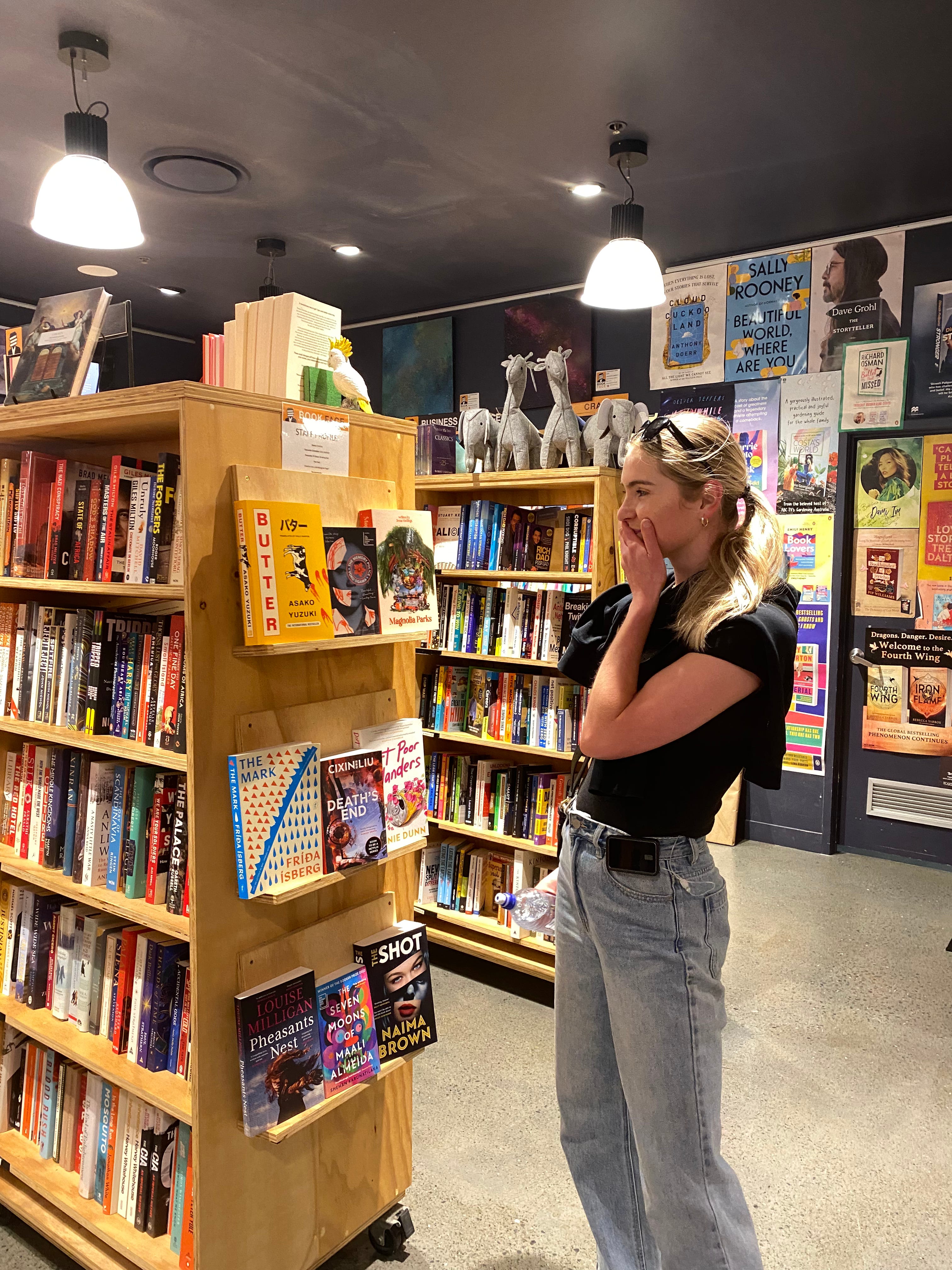
From the age of 7 to 12, my parents would catch me under the doona hours past my bedtime completed engrossed in Rainbow Magic or Enid Blyton.
Then high school came. I was forced to read books I had absolutely no interest in, and my love for reading vanished. For seven years I didn’t pick up another book outside of what I was assigned. I filled my spare time with my phone, sports, or shopping trips, and replaced my reading with watching - movies, reels, TV shows, you name it.
This is one of my biggest regrets. Because today, I credit self-education: reading, podcasts, courses and coaching, as one of the top five reasons for every ounce of success I’ve had in life. More than my five years of university.
I’m not the only one.
Today’s biggest tech CEOs are getting their kids off the very devices they sell and into real books. The most audacious founders, the most intelligent operators, and the most interesting people I know all read hundreds of books a year.
So before I get back to the Claude tutorials next week, I wanted to share something I’ve been thinking about more and more the longer I spend with AI.
At it’s core, AI is an amplifier.
If you’re a good writer, AI will help you get more good writing into the world. If you’re a bad writer, it’ll just produce bad writing faster. Give it a good business process and it’ll run smoother, but give it a broken one and the problems you face will expand exponentially.
And while AI can’t practice emotional intelligence, curiosity and morality in the same way we can, it can help us amplify what already exists in ourselves
If you’re curious, you can explore those curiosities faster
If you have basic emotionally intelligence, you can develop it further
For those of us trying to do good in the world, it'll help us do more of it, but for those with less noble agendas, it does exactly the same.
AI amplifies what you know, how you do things and who you are as a person.
Which is why I strongly believe intellectual curiosity is one of the most attractive traits you can have. As a human, as a founder, as an employee, as a conversationalist. Especially today.
When AI can do basically anything, the ability to connect ideas across domains, to think critically, to be emotionally intelligent, to have real creativity, to understand people, commands a premium.
And in my experience, these things can’t always be taught through facts or traditional non-fiction. They can only be truly understood through a select few formats.
The specific books you need will differ based on your goals and where you’re starting from. But there are five categories I’d argue are universal when preparing for success in work and life over next 10+ years. Today I’m sharing all five, with specific book recommendations for each.
Category 1: Human Nature
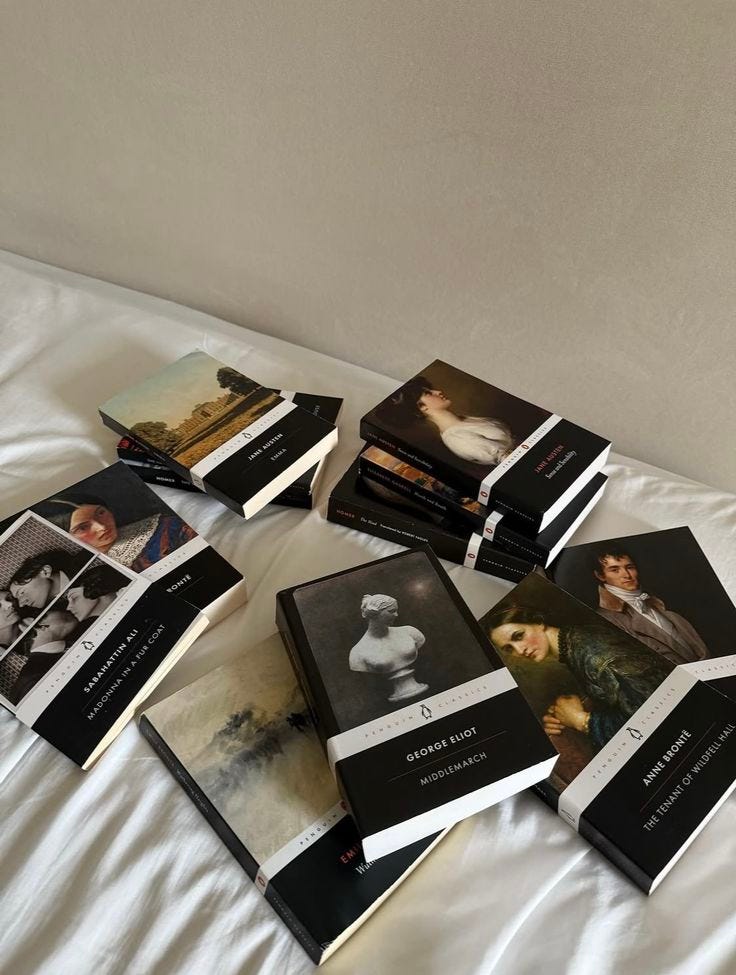
Classics, historical fiction, philosophy, psychology
If you know anything about the world you know that everything is in constant fluctuation. Businesses will rise and fall. Jobs will come and go. Economic cycles will peak and crash. Technology will evolve. Political parties will change. The world in 2040 will look nothing like the one we’re preparing for right now, and we will never be able to keep up.
But throughout it all, there is one common thread that has never and will never change, dare I say a thread that compounds in every single context.
Human nature.
The subconscious motivations, desires, goals, fears, envies and egos of humans will continue to be the underlying cause of all decisions.
The same need for belonging that determined survival for thousands of years is why pursuing audacious goals still feels like a threat to your nervous system.
The same envy and insecurity that destroyed friendships in ancient Rome is what triggers the unsolicited hate comments on your social media posts.
The same status games Jane Austen wrote about in Pride and Prejudice are playing out right now, in your business, in your relationships, and in your personal life.
Classics, historical fiction, philosophy and psychology teach you about status, ethics, power, subconscious bias, human motivation and historical patterns to build an understanding of people that frees you from the need for certainty. Because when you understand people, you don’t need to know what’s going to happen in the future.
If you understand how to find purpose, how to navigate change, how to assess and analyse and empathise with and motivate other humans, the list goes on… you will walk into every single room with an advantage for the rest of your life. It works for business, it works in investing, in relationships, conflict, health, personal life, career. You will see the moves before they happen, you will know what people want without them saying it directly, you will understand why technology and economic cycles change and what happens when they do, and you will be a more emotionally intelligent, empathic human.
The world has never and will never stop changing, but human nature will always stay the same.
And no matter what you do, you will always be working with people.
There’s also something about reading about the past that feels like a breath of fresh air. Things feel simpler, the overstimulation that we all feel today seems to disappear. It almost takes you back to the root of what it means to be a human (for me, at least). I think we need more of that with all the chaos in the world right now.
This category alone could take you years to work through. It’ll serve you for many, many more.
Just finished: East of Eden, Influence (re-read)
Some of my favourites:
Classics:
Pride and Prejudice by Jane Austen
The Great Gatsby by F. Scott Fitzgerald
1984 by George Orwell
The Grapes of Wrath by John Steinbeck
The Brothers Karamazov by Fyodor Dostoyevsky
The Art of War by Sun-Tzu
History / human evolution / philosophy:
Psychology:
I haven’t explored much historical fiction, but Daphsreads has some great recommendations in this reel.
Category 2: Biographies
To me, biographies are a special kind of magic that teach you more about life, business and human nature than 100 self-help books ever could, while simultaneously immersing you in the kind of peace and flow state that only story can bring.
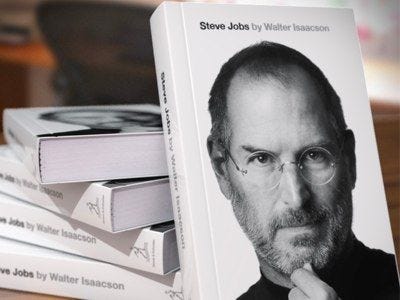
The first biography I ever read was Steve Jobs by Walter Isaacson in 2023, and I can still recall more from that audiobook than the dozens of other self-help books I read that year.
It makes so much sense.
Biographies educate you through story, a format our brains naturally remember.
For me personally, they’ve built pattern recognition which has helped me capitalise on opportunities.
They’ve rewired my expectations - showing me what success looks like at the very beginning of the journey, not just once the success is achieved.
They’ve translated “a successful person” into specific, observable traits and behaviours, instead of just an idea. The sheer conviction and self-confidence almost every founder possesses, their singular focus and pursuit of a vision, their determination and presence - reading about it has challenged me to embody more of these traits in my own life.
Perhaps most valuably, they’ve reduce the cost of ignorance in my life, letting me learn from others’ mistakes instead of being forced to go through avoidable ordeals myself.
To be completely honest, these books have helped me on an emotional level too. I’ve often felt like the odd one out throughout my life. I think we all feel this way, deep down. Many of these books helped me get into the minds of others who were ‘different’ but revelled in it and used it to their advantage. It’s helped me become more confident in who I am and the value I can bring to others, even if it is different.
If you need some convincing before committing to a full book, just listen to a few episodes of the Founders podcast. It’s a great introduction to the genre.
Current read: Made in America by Sam Walton (the story of Walmart)
Some of my favourites:
The Almanack of Naval Ravikant by Eric Jorgenson (free download & audiobook) - an absolute essential
Poor Charlie’s Almanack by Charlie Munger
Principles: Life and Work by Ray Dalio
Steve Jobs by Walter Isaacson
Benjamin Franklin by Walter Isaacson
Anna: The Biography by Amy Odell (Anna Wintour’s story actually inspired The Devil Wears Prada movies)
The 38 Letters from J.D. Rockefeller to his son - it might be helpful to learn a bit about Rockefeller’s story before reading this. There’s lots of Rockefeller biographies. What I love about this one is that he never expected these letters to be released, so you get a truer picture of how he actually thought than most of the other biographies give you.
The Hard Thing About Hard Things by Ben Horowitz
I’m looking for more female biographies and I’m sure I’m not the only one - if you have any recommendations leave them in the comments!
Category 3: Targeted skill building
This category is all about just-in-time reading. Hear me out.
I think there’s a reason we remember certain people, places, books, podcasts, content more than others. And it actually has nothing to do with how good they were. It’s about relevance.
I will always remember Atomic Habits not because it went viral, but rather because I read it right as I was starting my entire self-improvement journey. I directly used that information to lose 20kg. That’s not something you forget.
I will always support and advocate for Chris Williamson (Modern Wisdom), because his podcast episodes came into my life at a time where I was most seeking those deeper philosophical conversations.
And you (hopefully) remember me, because I’m helping you get your head around AI at a time when you’ve needed it most and haven’t been able to find a straight answer.
But I don’t remember the 6 months of study I did on Frankenstein in high school because 16-year old me was too busy playing netball and running after boys to care about the conflict between man and nature.
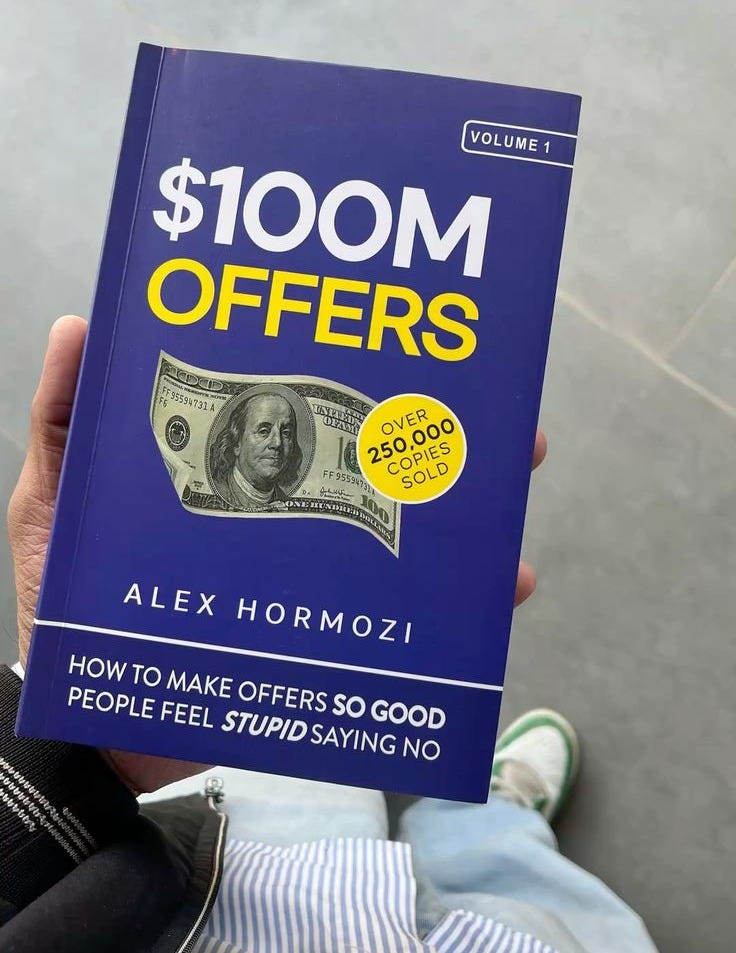
Influence and $100m Offers were good the first time I read them, but they only changed the way I saw the world the second time around because I actually had a business to apply it to.
So just-in-time reading is the one situation where I highly advocate for traditional non-fiction books. Read it when you need it, not because it’s on a bestseller list.
Because these books still matter.
We are entering a generalist era. Businesses are getting smaller, roles are overlapping and job titles are blurring because people can do more with less. Every day I’m seeing the power that comes from understanding the 20% of a wide range of domains that gets you 80% of what you need. Personally, and in the businesses I’m working with.
There is a real difference between asking AI to act as an ‘expert copywriter’, and giving it the actual first principles behind what great copy does. The more foundational knowledge you have, the better your results with AI become.
You don’t know what you don’t know. The goal is to get as far from unconscious incompetence as possible, across all the skills and domains that matter most for your goals. For me, that’s marketing, sales, copywriting, psychology, communication, business systems, coding, and the process of teaching and learning itself.
But don’t start with everything. Make a list of your just-in-time topics: the gaps you have right now.
Currently: I’m actually not reading any books in this category. All my focus in this area right now is on staying up to date with AI.
Some of my favourites from the past:
Marketing: $100m Leads, Influence, Pre-Suasion, Ogilvy on Advertising, Expert Secrets
Sales / Negotiation: Never Split the Difference, SPIN Selling, Way of the Wolf, $100m Offers, $100m Money Models
Communication: Cues, Think Fast, Talk Smarter, How to Win Friends and Influence People
Copywriting: On Writing Well, Made To Stick, Hooked
Business Systems: Thinking in Systems, The E-Myth Revisited, Built to Sell, Traction
Category 4: Self-mastery
You cannot select your parents. You can’t choose your hometown. You cannot change your past or the beliefs you inherited or the subconscious influences you picked up through movies, mainstream media, teachers or friends before you had conscious control over them.
But you can take charge of your own self-image and re-engineer the way you see the world.
Growing up I was never a manifestation, affirmation or spiritual person but boy am I glad I discovered this side of reality, because I am obsessed with the idea that we can change the way we experience life by changing how we look at the world and ourselves.
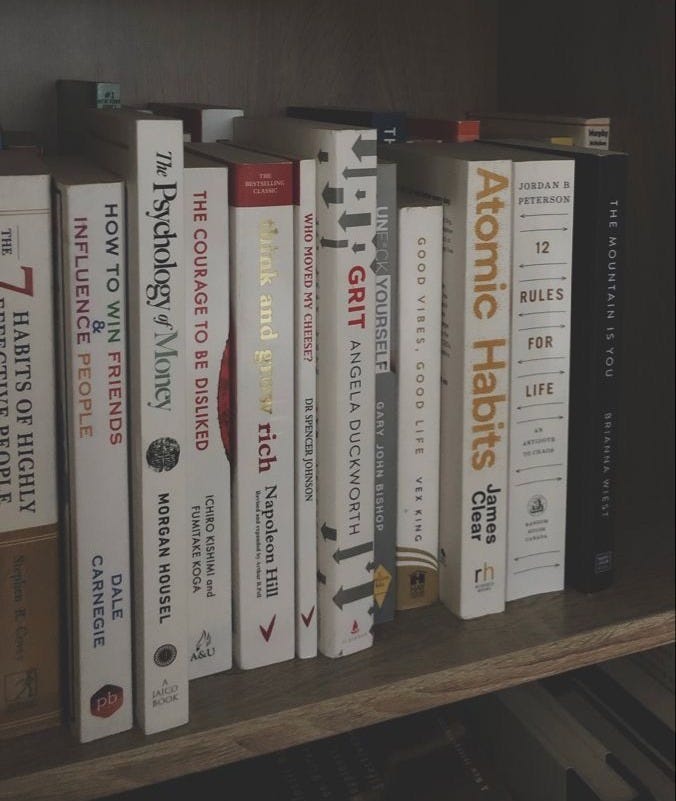
The entire premise of Atomic Habits sits on this assumption. To change your habits, you must first change your identity - becoming the type of person who works out consistently, who writes every morning, who starts conversations instead of staying silent.
Once you read the books in this category, your brain doesn’t quite go back to normal. For a few weeks after finishing one, it’ll make you feel like you’re living in a fundamentally different world to those around you. Over time, they will empower you to live more like yourself, to become confident in who you are and what you offer, to think bigger and have the audacity to go after those big things, to refuse to accept anything below what you’re worth.
Naval has a line that I am extremely bullish on, especially as social media makes distribution accessible to all and AI does the same with building:
Escape competition through authenticity
Basically, when you’re competing with people, it’s because you’re copying them. But every human is different, so don’t copy. Just do your own thing. No one can compete with you on being you. And so the more authentic you are to who you are, and what you love to do, the less competition you’re going to have.
But being authentic isn’t easy when you’ve been told your authentic self is not enough. Achieving the level of success you want isn’t easy when you’re subconsciously blocking yourself from being able to achieve it.
Being the type of person who achieves success isn’t easy when you’re not grounded, when you can’t self-regulate your emotions or have the discipline to focus on what’s important over what’s attractive.
Which is where these books come in. They’ve built my emotional intelligence, helped me overcome limiting beliefs, expand my vision for what’s possible, change my mindset and my behaviour to achieve my goals, and increase my understanding of myself and how to thrive in our society as it exists right now.
Current read: The Daily Stoic (I listen to this on my walks every morning)
Some of my favourites:
Psycho-Cybernetics (one of my all-time favourites).
The Courage To Be Disliked (this one has a special place in my heart)
Daring Greatly (read this travelling through Japan)
So random, but figuring out my Myers-Briggs personality type, and getting AI to create a ‘owner’s manual’ for me.
Category 5: Fiction
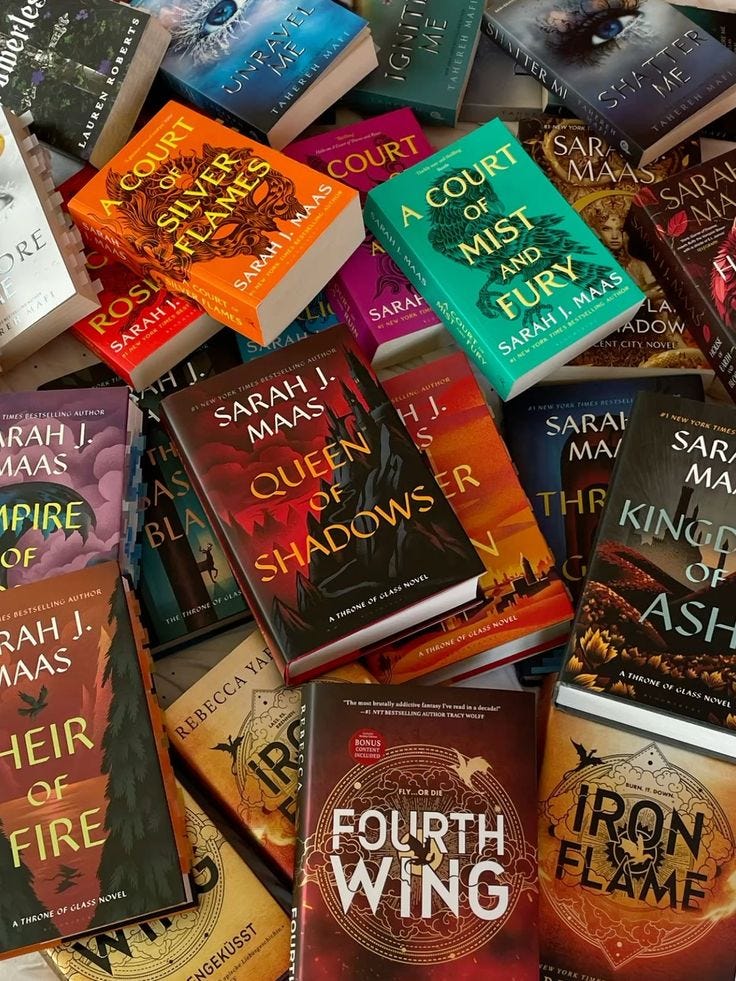
You bet I’m on the romantasy train
Deep down, I think we’re all naturally obsessive people. For most, it’s a hobby - maybe hiking, watching movies, travelling.
For me, it’s something a little different. I can become obsessed with anything for the right reason. I will literally obsess over my goals from the moment I wake up to the moment I fall asleep. I can stare at my computer screen for an unhealthily long amount of time and actually enjoy myself if it’s for a goal or a cause I believe in.
This is something I’ve come to love about myself. But as you can imagine, there’s many cases in which it’s far from a desirable trait.
Fiction is a bit of a forcing function for me to switch my brain off and allow myself to let go of the pursuit of achievement for a little while. It’s the healthiest form of escape I’ve found.
That’s how it started, anyway.
Because beyond the escape, there are tangible benefits I didn’t realise. Fiction increases your empathy, emotional intelligence and open-mindedness (in fact, it’s been said that public violence steadily decreased following the release of the printing press, and therefore widespread distribution of books, in 1440).
I love how Adam Grant puts it “When Katniss Everdeen, Harry Potter, or the March sisters are on a screen, you’re observing them. When you read their stories, you become them. Slowly but surely, that builds your capacity to see perspectives that aren’t yours and feel compassion for people who aren’t like you.”
It’s also helped me discover parts of myself I didn’t realise existed until I saw them reflected back at me through a character on a page.
And come on. Xaden, Rhys, Rowan, Cassian. Need I say more?
Most recent read: A Court of Silver Flames (prepping for the upcoming Sarah J. Mass releases)
Some of my favourites:
Crescent City (SO underrated)
The Classics from category 1
What are your thoughts?
Have you read any of these?
What evergreen skills are you prioritising right now?
What would you add to this list - either books or categories?
I’ll be doing a follow-up soon on the specific skills I think matter most to develop right now, based on what I’m seeing, the conversations I’ve been having, and the research I’ve done. If that’s something you’d find useful, let me know in the comments below.
See you back in the Claude series next week.
I love this post! We all need to be reminded that there’s more to being intellectually curious than AI. Re: female biographies, this one is on my list: https://amzn.to/4v5fgxx. And Katherine Graham’s autobiography https://amzn.to/49iMote.
Saving you great list and very strongly suggesting a title to you after seeing Ray Dalio’s book on your biography list - THE FUND by financial reporter Rob Copeland.